Subscriber records lack tower context
Support cannot quickly judge shared-impact issues when the customer record is disconnected from the serving site and sector.
Connect towers, sectors, radios and subscriber service records so support can see network context while billing and access teams keep the account lifecycle moving.
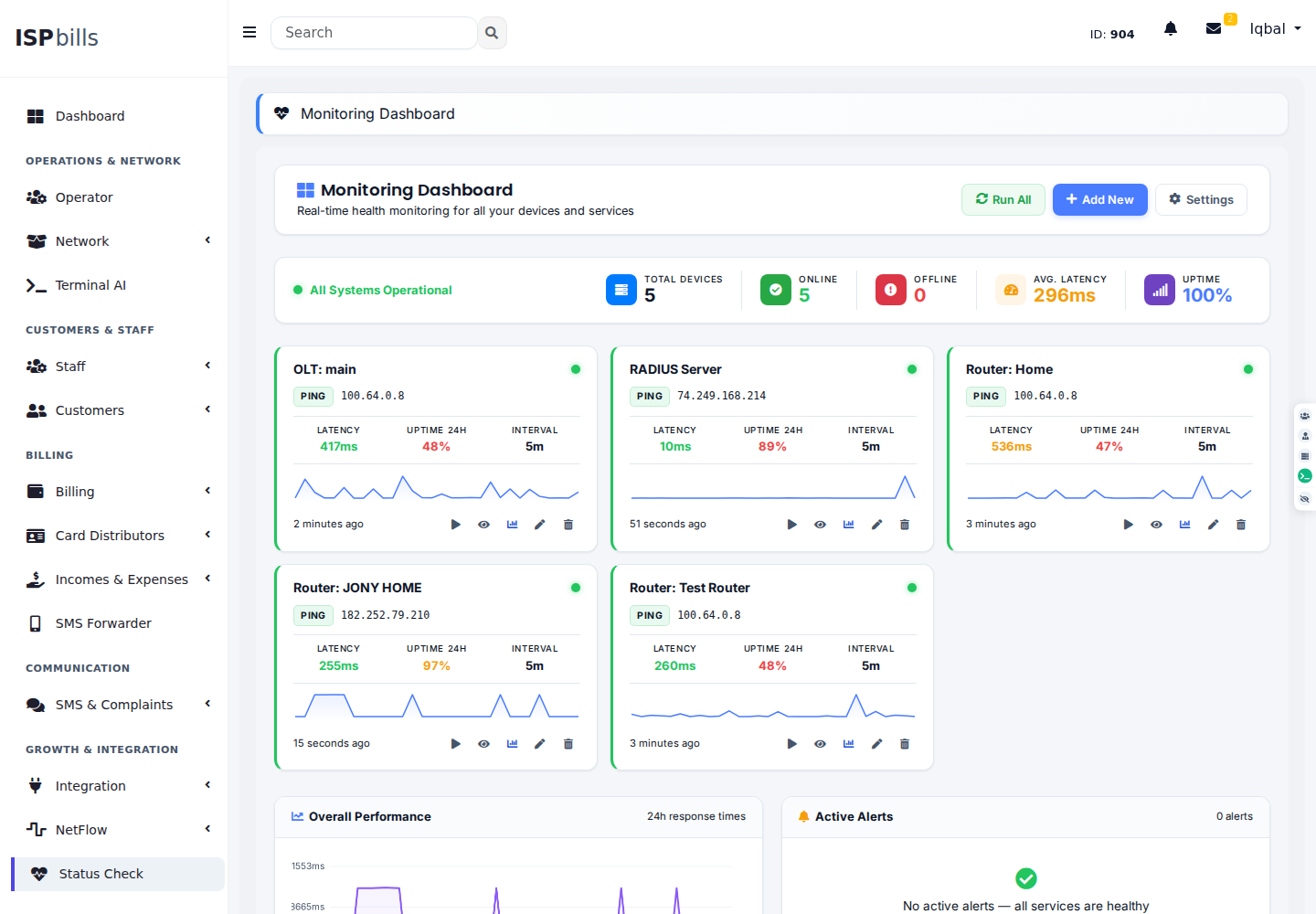
Fixed-wireless service is shaped by the tower, sector and link—not only the subscriber account. Operations need those relationships visible when a customer calls or a shared segment degrades.
Support cannot quickly judge shared-impact issues when the customer record is disconnected from the serving site and sector.
Signal and device health need service context before the team can decide whether to investigate a single CPE or a wider segment.
Radios, antennas and CPE are harder to audit when equipment records are scattered across notes and spreadsheets.
Build a usable chain from physical site to subscriber account, then use that context across monitoring, support, authentication and billing.
Record towers and sectors so the team has a consistent structure for devices and service relationships.
Link the subscriber service to its serving sector and relevant access equipment.
Use available device, signal and session information to distinguish individual-link issues from shared impact.
Keep authentication, recurring billing and subscriber lifecycle actions in the same operational flow.
Give engineers, support staff and billing teams a shared source of operational context.
Organize wireless sites, sectors and subscriber relationships.
Review available signal and link-health information in operational context.
Track radios, antennas and CPE against the sites where they are deployed.
Use RADIUS authentication and session accounting for subscriber access.
Surface configured device and service events for team follow-up.
Use sector and subscriber information to support capacity review and planning.
Keep the team in control by validating data, access rules and operational ownership before each stage goes live.
Create a reliable tower and sector structure, then identify the devices and subscriber groups served by each.
Configure supported device monitoring, subscriber authentication and plan rules around that structure.
Validate monitoring, subscriber association, session accounting and billing before expanding site by site.
Use a shared operating context to understand subscriber access, network health, support impact and billing state.
Practical answers for teams evaluating operational fit and planning a rollout.
Yes. The fixed-wireless workflow is designed to keep the subscriber service connected to its serving network context.
Supported devices can contribute health, signal and event information. The exact data available depends on the equipment and its monitoring interface.
RADIUS authentication, session accounting, subscriber plans and recurring billing are brought into the same operational platform.
Yes. Starting with a representative sector gives the team a controlled way to validate device visibility, service relationships and subscriber workflows.
Start a free trial today — no credit card, no commitment.