Access and billing drift apart
A subscriber can be active in one system and overdue in another, leaving teams to reconcile service state by hand.
Give operations one place to authenticate subscribers, apply plan policy, account for usage and act on billing status across a wired access network.
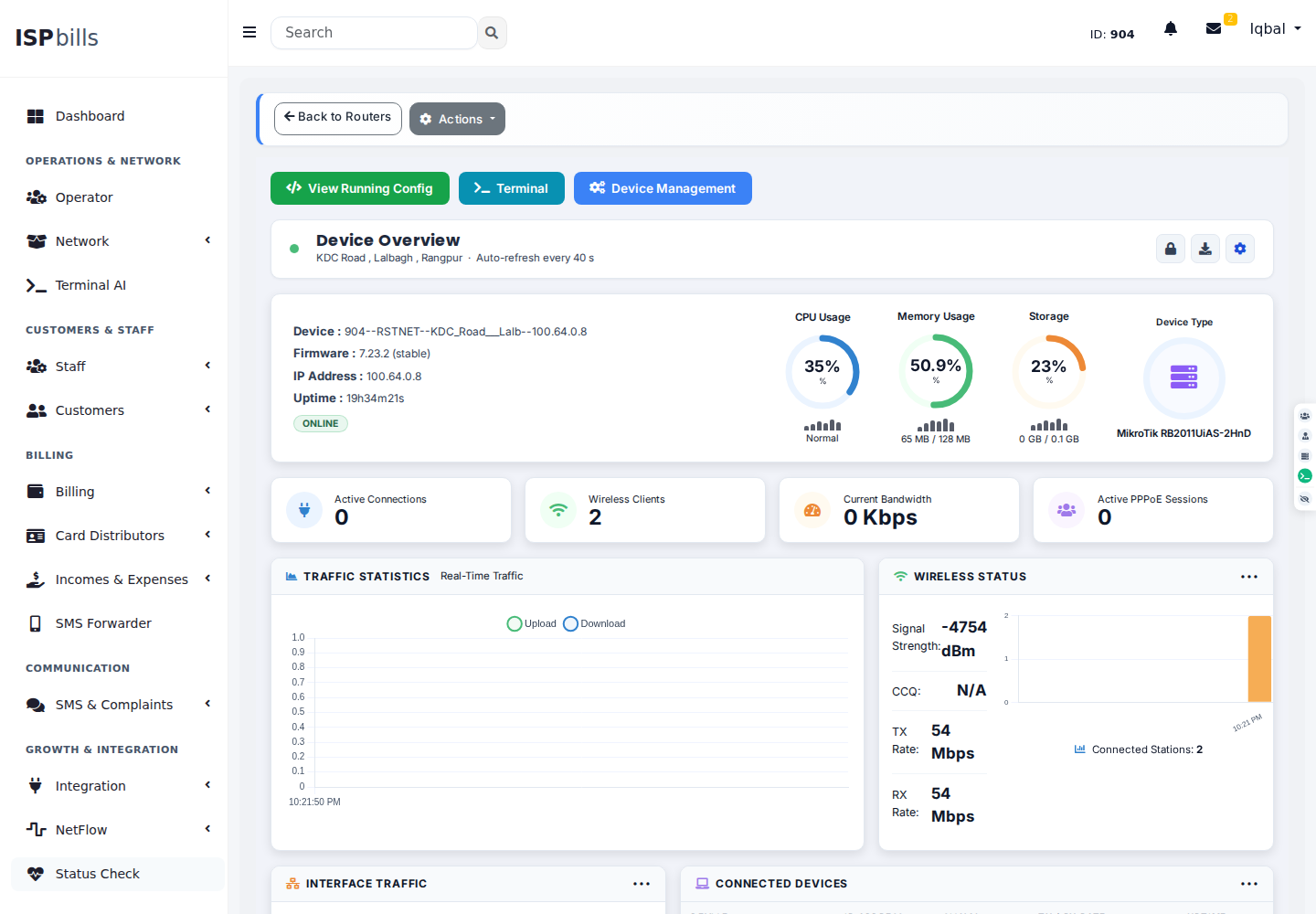
Wired broadband becomes difficult to operate when authentication, usage records and accounts tell different stories. ISPbills brings those decisions into one operating flow.
A subscriber can be active in one system and overdue in another, leaving teams to reconcile service state by hand.
Support needs authentication, plan and usage context together before it can explain a failed login or unexpected disconnect.
New activations, plan changes, suspensions and renewals become repetitive work when each step lives in a separate tool.
Follow the subscriber from first authentication through policy, accounting and renewal without losing operational context between teams.
Use central RADIUS authentication for PPPoE or IPoE access and keep the session tied to the correct account.
Apply the configured speed, quota and session rules associated with the subscriber plan.
Record session activity and give support a clearer view of subscriber usage and connection history.
Run recurring billing and use account status to guide renewals, suspensions and reactivation.
Give engineers, support staff and billing teams a shared source of operational context.
Centralize PPPoE and IPoE authentication, session rules and subscriber access state.
Create recurring invoices and keep payment status available to the team managing service.
Review bandwidth and usage information against the subscriber record.
Bring supported access-device health into the same operational workspace.
Coordinate onboarding, plan changes, suspension and reactivation from one account.
Review billing, subscriber and usage activity without rebuilding the picture in spreadsheets.
Keep the team in control by validating data, access rules and operational ownership before each stage goes live.
Document authentication, plan policy, billing cycles and the devices involved before changing subscriber traffic.
Translate existing packages, quotas, invoice timing and service states into a controlled ISPbills setup.
Test with a defined subscriber group, verify authentication and accounting, then expand the rollout.
Use a shared operating context to understand subscriber access, network health, support impact and billing state.
Practical answers for teams evaluating operational fit and planning a rollout.
The wired broadband workflow supports PPPoE and IPoE access scenarios through centralized subscriber authentication and policy. The exact network configuration depends on the access equipment and topology in use.
The subscriber account holds plan and billing context alongside service state, so operations can coordinate activation, suspension, renewal and reactivation without reconciling separate records.
Yes. Plans can carry speed and quota policy for use in the authentication and session workflow.
A staged rollout is the safer approach. Map the existing rules, validate a defined group and expand only after authentication, accounting and billing behaviour are confirmed.
Start a free trial today — no credit card, no commitment.