Volumetric floods
Detect sudden bandwidth and packet-rate growth against configurable limits and the learned traffic baseline.
UDP · TCP · ICMPDDoS detection and controlled response · ISP networks
Turn sFlow, NetFlow, IPFIX, mirrored traffic and cloud flow logs into a focused DDoS incident—then coordinate approval-bound RTBH, scrubbing, blocklist or webhook response from one control plane.
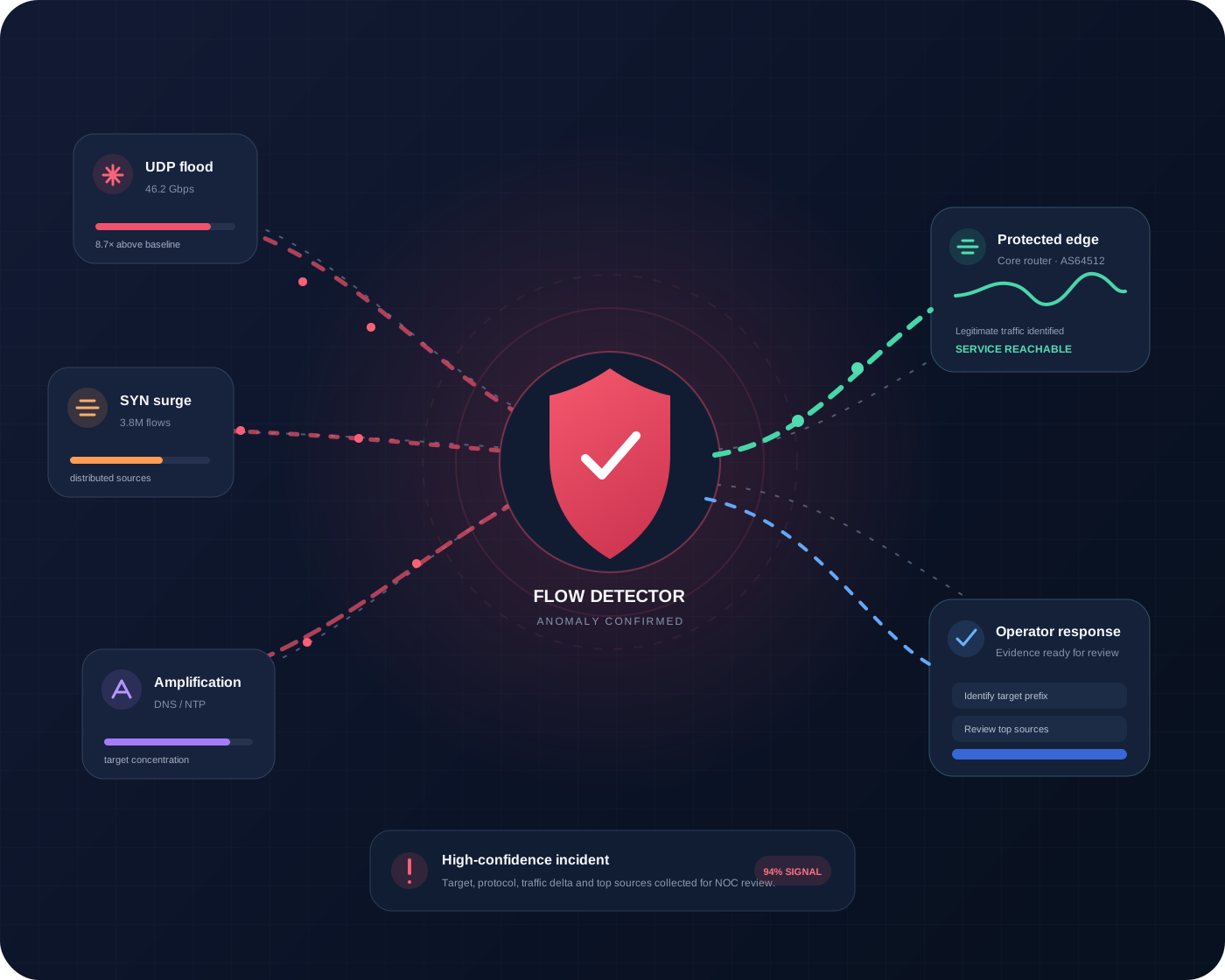
Strong DDoS pages lead with speed and scale. For an ISP operator, the useful question comes next: what changed, where, and which evidence supports the alert?
Detect sudden bandwidth and packet-rate growth against configurable limits and the learned traffic baseline.
UDP · TCP · ICMPSurface SYN, SYN-ACK and FIN floods through packet rate, flow creation and protocol concentration.
SYN · SYN-ACK · FINIdentify abnormal DNS, NTP, SSDP, SNMP and GRE traffic directed at protected services.
DNS · NTP · SSDP · SNMP · GREPreserve protocol and target evidence when fragmented IP traffic departs from the expected profile.
IPv4 · IPv6 · fragmentsKeep bandwidth, packets, flows, protocols and targets attached to one incident as the attack changes shape.
Combined techniquesTune thresholds globally or for an authorized prefix, host or protocol without losing the broader network baseline.
Host · subnet · protocolISPbills follows a clear operational progression: collect, establish normal behaviour, detect abnormality, preserve evidence, apply the tenant’s response policy, verify, and withdraw temporary controls.
Normalize sFlow, NetFlow, IPFIX, mirrored traffic or supported cloud flow logs.
Evaluate bandwidth, packets per second and flow count against baselines and explicit thresholds.
Separate inbound and outbound traffic, identify affected and attacking devices, then add ASN, official RIR, community and routing-security context.
Use observe-only, approval-bound or verified automatic workflows with exact targets and timed withdrawal.
DDoS changes can affect routing and customer reachability. ISPbills keeps detection separate from response, makes the control mode explicit, checks protected scope, the operator allowlist and an automatically discovered essential-address perimeter, and retains expiry and withdrawal state.
Every plan includes flow analysis, anomaly detection and the guided incident workflow. Checkout collects the exporter and capacity details needed for setup.
For smaller ISPs and a first telemetry rollout.
More headroom for larger or multi-edge networks.
Maximum listed capacity for busy ISP edges.
The direct checkout asks for the information our team needs to prepare a safe rollout.
The control plane supports sFlow, NetFlow v5/v9, IPFIX, SPAN or port mirroring, AWS VPC Flow Logs and Google Cloud VPC Flow Logs. Connected MikroTik RouterOS devices can receive the native ISPbills NetFlow or IPFIX collector target in one step, and health is shown only after real records are decoded.
Yes, when the tenant deliberately configures it. A connected RouterOS 7 device can receive a dedicated eBGP multihop peer to the native ISPbills speaker in one click. ISPbills verifies Established state, announces only an approved attacked IPv4 /32 with the blackhole community, shows the active route count, and withdraws it on expiry. Local RouterOS blackhole remains available without BGP.
No. ISPbills does not claim to absorb attack traffic in a global scrubbing network. It gives an ISP visibility and response context so the team can act locally or coordinate with its transit provider.
Yes. Authorized public and private IPv4 or IPv6 CIDRs can be declared. The mitigation allowlist is independent of protected scope, so peering, DNS, management, monitoring and other must-stay-up addresses can always be excluded.
ISPbills automatically excludes tenant router, OLT, managed switch and radio addresses, gateways, collector and BGP endpoints, connector addresses and the suspended-user pool. It rechecks this inventory before each RouterOS or BGP action, alongside the operator allowlist.
No. Official APNIC, ARIN and other RIR registration identifies allocation ownership, while licensed community feeds add investigation context. Neither authorizes mitigation. Possible RPKI origin, BGP hijack or route-leak warnings also require network-engineer validation.
The service pauses and the tenant Group Admin must choose a paid plan or continue without DDoS Protection. ISPbills does not create an invoice or convert the trial automatically.