Centralized access policyUpdated October 2026
RADIUS for ISPs: FreeRADIUS, PPPoE, Accounting & CoA
Centralize subscriber authentication, authorization and accounting while keeping plan, payment and support context connected. ISPbills provides a FreeRADIUS operating interface for NAS devices, attributes, sessions and controlled subscriber lifecycle actions.
- Authentication, authorization and accounting
- PPPoE and Hotspot access
- Sessions, accounting and CoA context
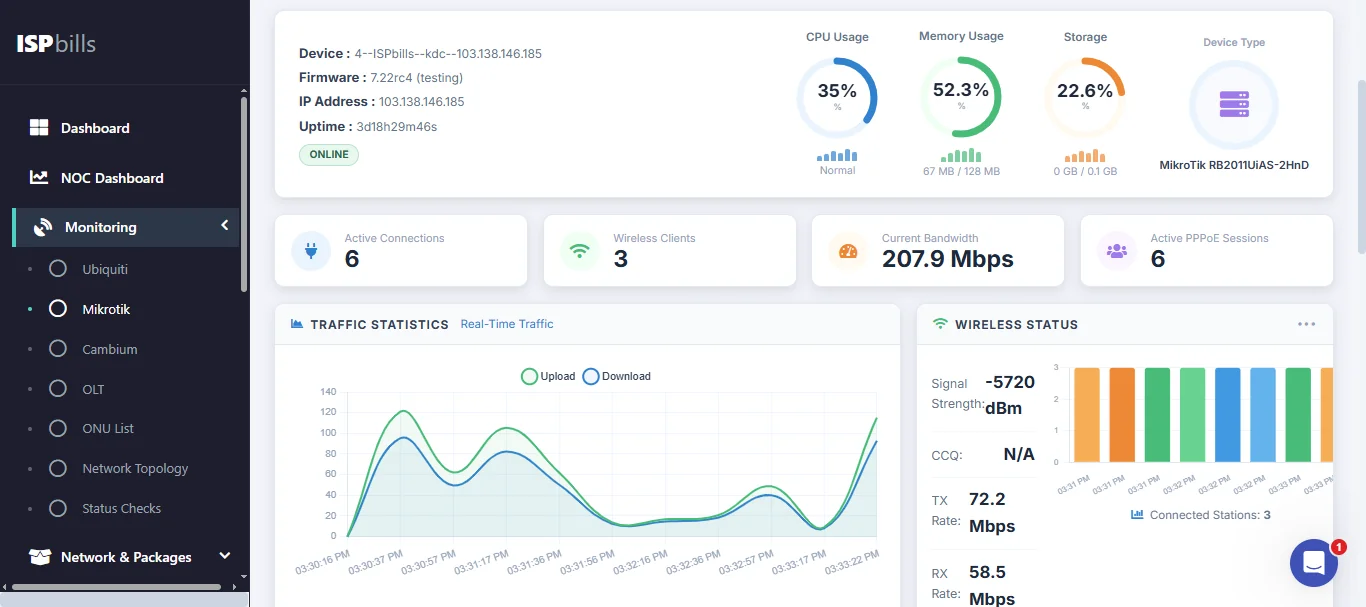
AAA policy should follow an explicit subscriber and service record.
RADIUS decides whether access is allowed and records how a session behaves. Billing decides whether the account is commercially eligible. Joining those states reduces manual mismatches while retaining an audit trail for operators.
Register each NAS
Store the client address, shared-secret relationship and device context with appropriate access controls.
Map subscriber credentials
Relate username, package and service state to the required check and reply attributes.
Authenticate and authorize
Evaluate credentials and return policy appropriate to the subscriber and access service.
Account and control sessions
Retain start, interim and stop records, then use supported CoA or disconnect workflows when required.
Everything this workflow needs—without losing the boundaries.
Capabilities shown here are implemented product areas. Device, provider and protocol behavior still depends on the selected integration and environment.
FreeRADIUS management
Operate NAS records, subscriber attributes and policy from the ISPbills administration interface.
PPPoE authentication
Centralize credentials and plan policy for supported broadband access servers.
Hotspot AAA
Use centralized identity and session accounting across compatible hotspot infrastructure.
Accounting records
Review session start, interim updates, stop state, usage and termination context.
CoA and disconnect
Coordinate supported session changes when commercial or package state changes.
Operational diagnosis
Put failed authentication, active sessions and subscriber billing state in one investigation path.
Keep authentication, billing and session control distinct—but connected.
RADIUS answers network-access questions. Billing answers commercial-eligibility questions. Joining their state is powerful precisely because the system retains the boundary between them.
Read implementation documentation →NAS clients
Synchronize compatible MikroTik, Cisco, Juniper and other NAS identities without copying router management credentials.
Policy attributes
Manage check and reply attributes for the subscriber, package and vendor contract your access design requires.
Sessions and control
Review start, interim and stop records, then use supported disconnect or CoA behavior after validation.
A session trail support and network teams can follow.
Accounting records connect usernames, NAS identity, assigned addresses, time and transferred data. Exact attributes and control behavior still depend on the access equipment.
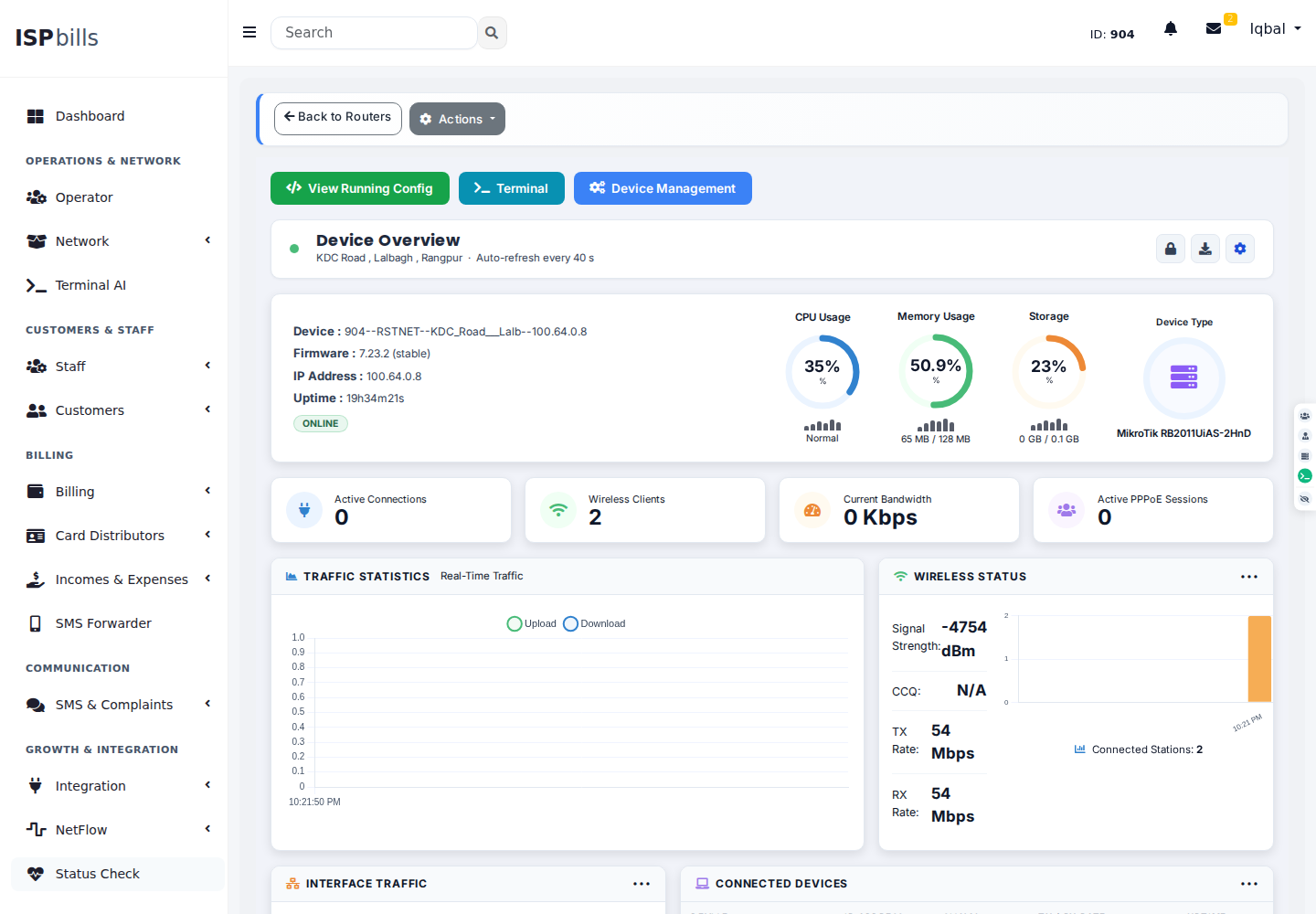
Focused guides for the decisions behind the product.
Treat RADIUS as production infrastructure, not a checkbox.
Public product information describes the current operating model. A controlled pilot proves the exact fit for your data, devices, providers and failure cases.
- 01Network pathValidate UDP reachability, source addresses, shared secrets, time synchronization and firewall rules.
- 02Attribute contractDocument vendor dictionaries, check and reply attributes, interim intervals and required policy behavior.
- 03Failure designPlan redundancy, logging, retry behavior and the expected customer experience when AAA dependencies are unavailable.
Straight answers before you deploy.
Need a model-, provider- or migration-specific answer? Bring the exact environment to the team.
What does RADIUS do for an ISP?
RADIUS centralizes authentication, authorization and accounting for compatible access equipment. It can validate credentials, return service attributes and record session activity.
Does RADIUS generate invoices?
No. RADIUS is an AAA protocol, not an invoicing engine. ISPbills connects RADIUS access state to a separate subscriber billing lifecycle.
What is RADIUS accounting?
RADIUS accounting receives session start, interim and stop records from a NAS. These records help operators inspect connection time, usage and termination context.
Does ISPbills support RADIUS CoA?
ISPbills supports configured CoA and session-control workflows for compatible devices. Exact vendor behavior should be validated in a representative pilot.
See how ISPbills fits the network you already run.
Explore the current product, then scope compatibility and migration with your actual devices, billing rules and integrations.